
DoggMatch

Choose carefully

Puppy, or a dog who's already grown up?

Neither is better. They're two quite different first years, and the right one depends far more on your life than on the dog.

A cocker spaniel puppy sitting beside a chewed slipper

A puppy

You get to shape almost everything — and you pay for it in sleep.

What's good

  • You see every stage of who they become
  • Socialising and habits start with you
  • Usually easier to introduce to other pets and children
  • A long life ahead of you together

What's hard

  • Broken nights, toilet training and chewing, for months
  • Needs company for most of the day at first
  • Personality is still a guess, even with a careful breeder
  • Vaccinations, neutering and early vet costs land in year one

A calm adult dog resting on a sofa in a sunlit flat

An adult dog

Much more of what you see is what you get.

What's good

  • Size, coat and temperament are already clear
  • Many are house-trained and can settle alone
  • Often calmer from day one
  • Rescues usually come with an honest assessment of the dog

What's hard

  • They arrive with a history you may only partly know
  • Some habits take patience to change
  • Fewer years together, especially with an older dog
  • Settling in can take weeks, not days
If your days are already full, an adult dog who knows how to be a dog is often the kinder choice — for you and for them.

Where from

Where will your dog come from?

Both routes can bring you a wonderful dog. Both are worth a few careful questions. Neither is automatically the right answer.

A mother dog resting with her puppies on a blanket in a family living room

A responsible breeder

What's good about it

  • You meet the mother and see how the puppies are being raised
  • Health testing relevant to the breed has usually been done
  • You get a fairly clear idea of adult size, coat and temperament
  • A good breeder stays in touch for the dog's whole life

Worth looking into

  • Are the puppies raised in a home, around normal household life?
  • What health testing has been done, and can you see the results?
  • How many litters do they have, and of how many breeds?
  • Will they take the dog back if your circumstances ever change?
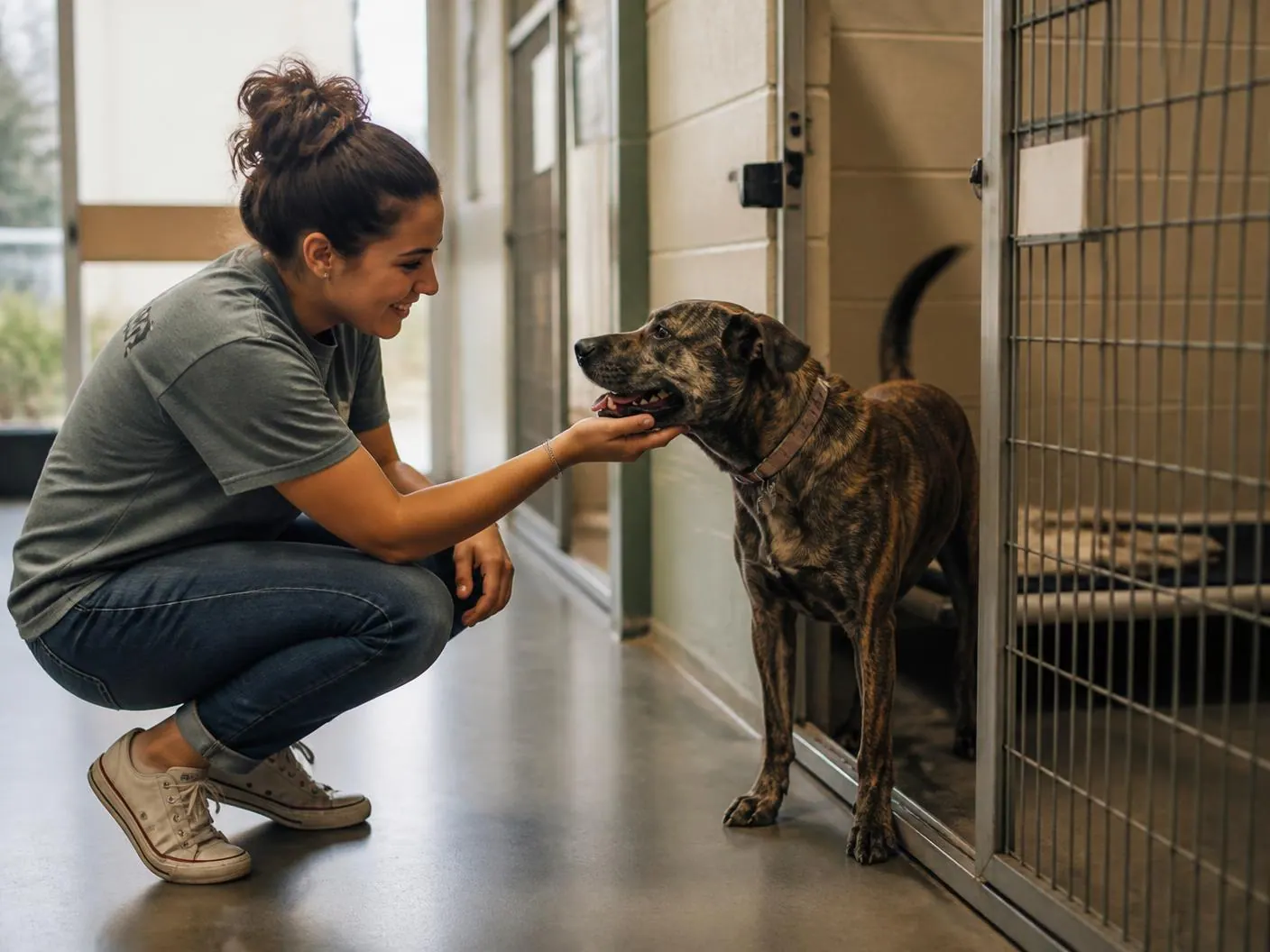
A woman crouching to greet an adult rescue dog at a shelter

Adoption or rescue

What's good about it

  • Adult dogs come with a personality you can actually meet
  • Good rescues assess and describe their dogs honestly
  • Often already vaccinated, chipped and neutered
  • Support after adoption is usually part of the deal

Worth looking into

  • What do they know about the dog's history and previous home?
  • How does the dog behave around children, other dogs and cats?
  • What health information comes with them?
  • What help is there if the first weeks are hard?

Meeting a breeder

What to ask, and what to notice.

Tick these off as you go. A good breeder will be pleased you asked — most of them wish more people did.

Questions worth asking

Things that give us pause

None of these prove anything on their own. Two or three together are usually a reason to take your time, or walk away — and it's always fine to walk away.

  • You're pressed to pay or decide immediately
  • You can't see where the puppies live, or meet the mother
  • Health or vaccination documentation is missing or vague
  • Straightforward questions get evasive answers
  • An unusually large number of unrelated litters, or many breeds at once
  • A puppy looks unwell, or is extremely fearful of ordinary things
  • The story changes between conversations

Adoption

Thinking about adoption?

Rescue dogs aren't damaged goods. Most are perfectly ordinary dogs whose people ran out of time, money or health. Here's what's worth talking through.

  • History

    Some dogs arrive with a full story, others with almost none. A good rescue will tell you honestly which one this is.

  • Temperament

    Ask what they've actually seen: with strangers, on the lead, in the car, left alone for an hour.

  • Health

    Ask for the vet notes, not a summary. Ongoing conditions are manageable when you know about them.

  • Behaviour

    Most 'problems' are a dog who hasn't been taught, or is frightened. Ask what help is available.

  • Your home

    Stairs, children, cats, a busy street — say all of it out loud. A good match matters more than a quick one.

  • Afterwards

    Ask what support exists in week two, when the first excitement has worn off and the real dog appears.