
DoggMatch

Food

How much should I feed?

Nobody can give you an exact number, and anyone who says otherwise is guessing too. What we can do is give you a sensible starting point, then help you adjust.

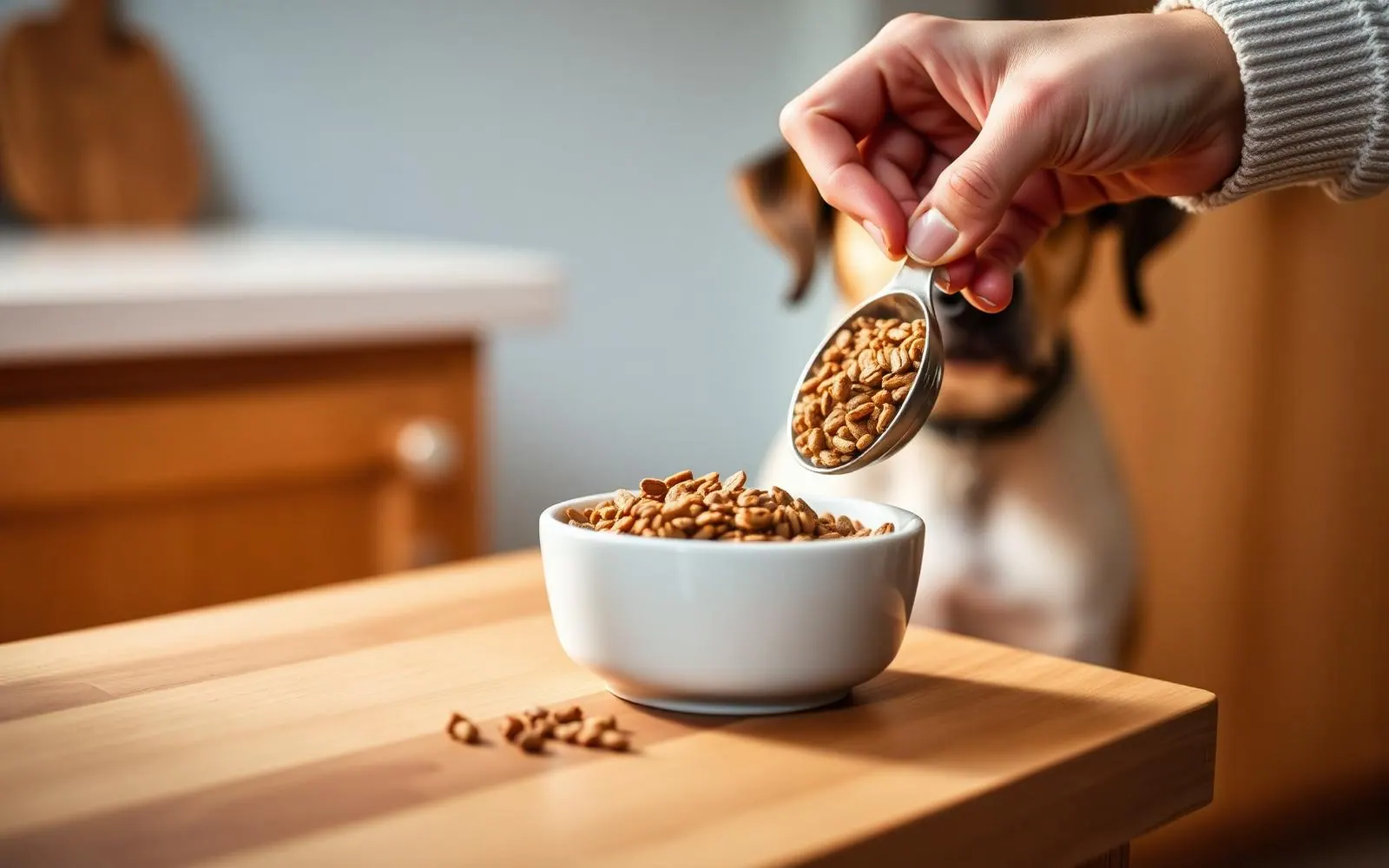
A bowl of dog food being measured in a kitchen

A starting point

Add your dog's weight and we'll work out a daily amount, show you the maths behind it, and convert it into grams of the food you actually feed.

Add your dog's details

The basics

Getting food right, without overthinking it

Read the label, not the packaging

The front of the bag is marketing. What matters is a statement saying the food is complete and balanced for your dog's life stage, and a feeding guide you can actually follow.

  • "Complete" means it can be fed on its own. "Complementary" means it can't
  • Check it's for the right life stage — puppy, adult or all life stages
  • Feeding guides are a starting point, not a rule. Adjust to your dog
  • Brands with vets and nutritionists on staff, running feeding trials, are a safer bet

How much, really

Every guide on every bag is an average. Two dogs of the same weight can need noticeably different amounts, and the honest answer is to feed, watch, and adjust every few weeks.

  • Weigh the food rather than using a scoop — scoops drift
  • Count treats and chews. They add up faster than anyone expects
  • Check body condition monthly and adjust by around 10% at a time
  • Neutered dogs often need a bit less than they used to

How often

Puppies need frequent small meals; adults do well on two. Splitting the day's food into two meals suits most dogs' routines better than one big bowl.

  • Under 4 months: three or four meals a day
  • 4 to 6 months: three meals
  • 6 months and up: two meals
  • Deep-chested dogs: avoid hard exercise right around mealtimes

Changing food

Sudden changes upset most dogs' stomachs. Take about a week over it.

  • Days 1–2: a quarter new, three quarters old
  • Days 3–4: half and half
  • Days 5–6: three quarters new
  • Day 7: all new food
  • If things get loose, slow down rather than pushing on

Water

Fresh water, always available, in a clean bowl. It sounds obvious, and it's still the thing most often forgotten on hot days and long journeys.

Raw and home-cooked

Both can be done well, and both are easy to get wrong. Home-cooked diets in particular are very often unbalanced unless a veterinary nutritionist has formulated them.

  • Raw feeding carries a bacterial risk to your dog and your household
  • Home-cooked needs a proper recipe and supplements to be complete
  • Talk to your vet before switching, especially for puppies and older dogs
  • This is a genuine decision to make with a professional, not from a forum

Then keep an eye on the shape

The real test isn't the number on the bag. It's how your dog looks and feels a month from now. Check monthly and adjust by about 10% at a time.

Weight & shape