
A little heavy
Ribs hard to feel, waist hard to see, belly running flat. Small changes work: measure the food, count the treats, add ten minutes of walking.
Weight & shape
The number on the scales matters less than how your dog looks and feels under your hands.
Add a weight roughly once a month. Two entries is all it takes for the trend to start showing.
Add your dog first and this will remember every entry.
Latest
—
No entries yet
Change
—
Add two weights to see this
Two entries a few weeks apart and the trend starts telling you something.
The one-minute check
Step 1
Run your fingertips along your dog's side. You should feel the ribs easily under a thin layer, a bit like feeling the bones on the back of your hand.
Step 2
Standing over your dog, look for a gentle narrowing behind the ribs. A straight or bulging outline suggests a bit extra.
Step 3
The belly should tuck up towards the back legs rather than running level with the chest.
Step 4
Changes creep up slowly. Doing this on the same day each month makes the drift obvious while it's still small.
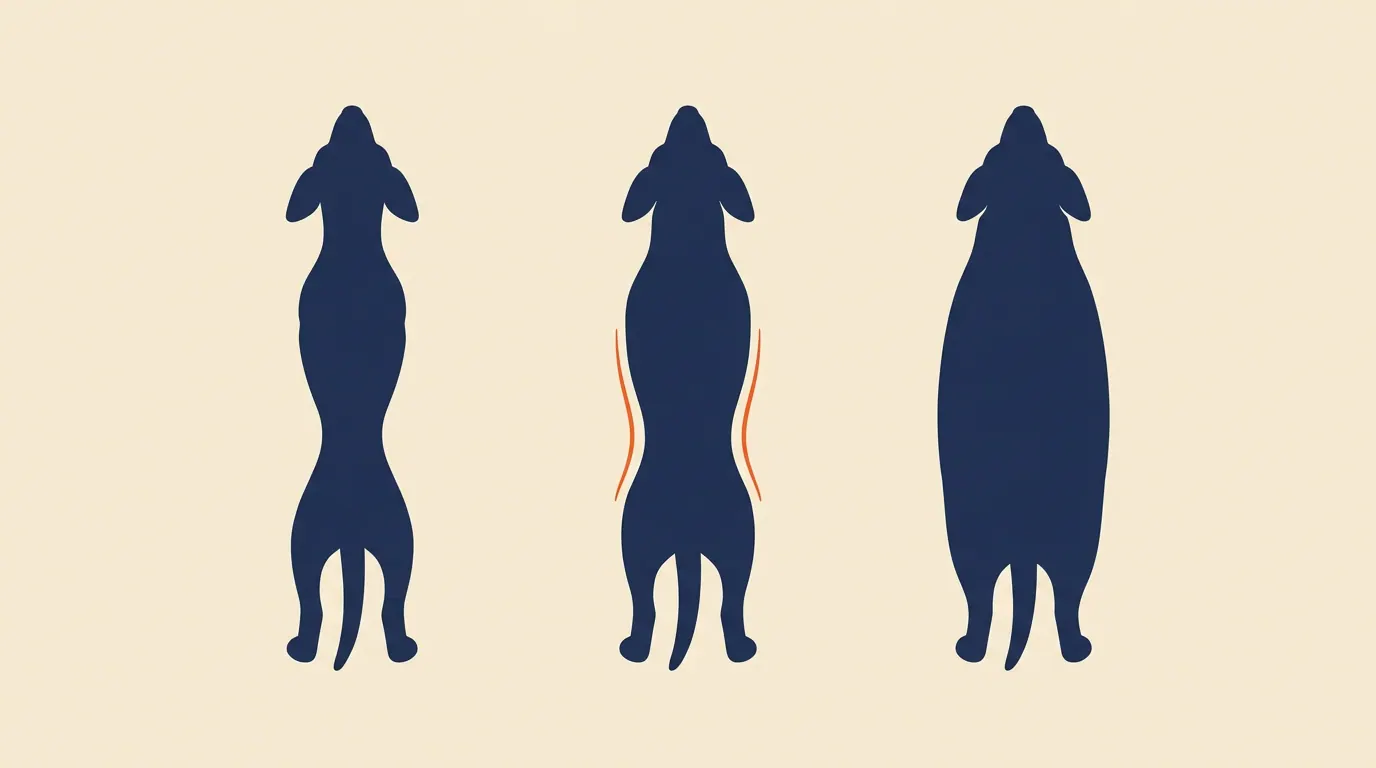
Ribs hard to feel, waist hard to see, belly running flat. Small changes work: measure the food, count the treats, add ten minutes of walking.
Ribs easy to feel, visible waist, belly tucked. Keep doing what you're doing.
Ribs, spine or hips standing out, very little cover. Worth a vet check rather than just more food — unexplained weight loss deserves a look.
Your vet can help you check body condition properly, and can talk through a plan if there's weight to lose. Sudden or unexplained changes in weight always deserve a conversation.
Based on guidance from