
Life at home
Being happily alone
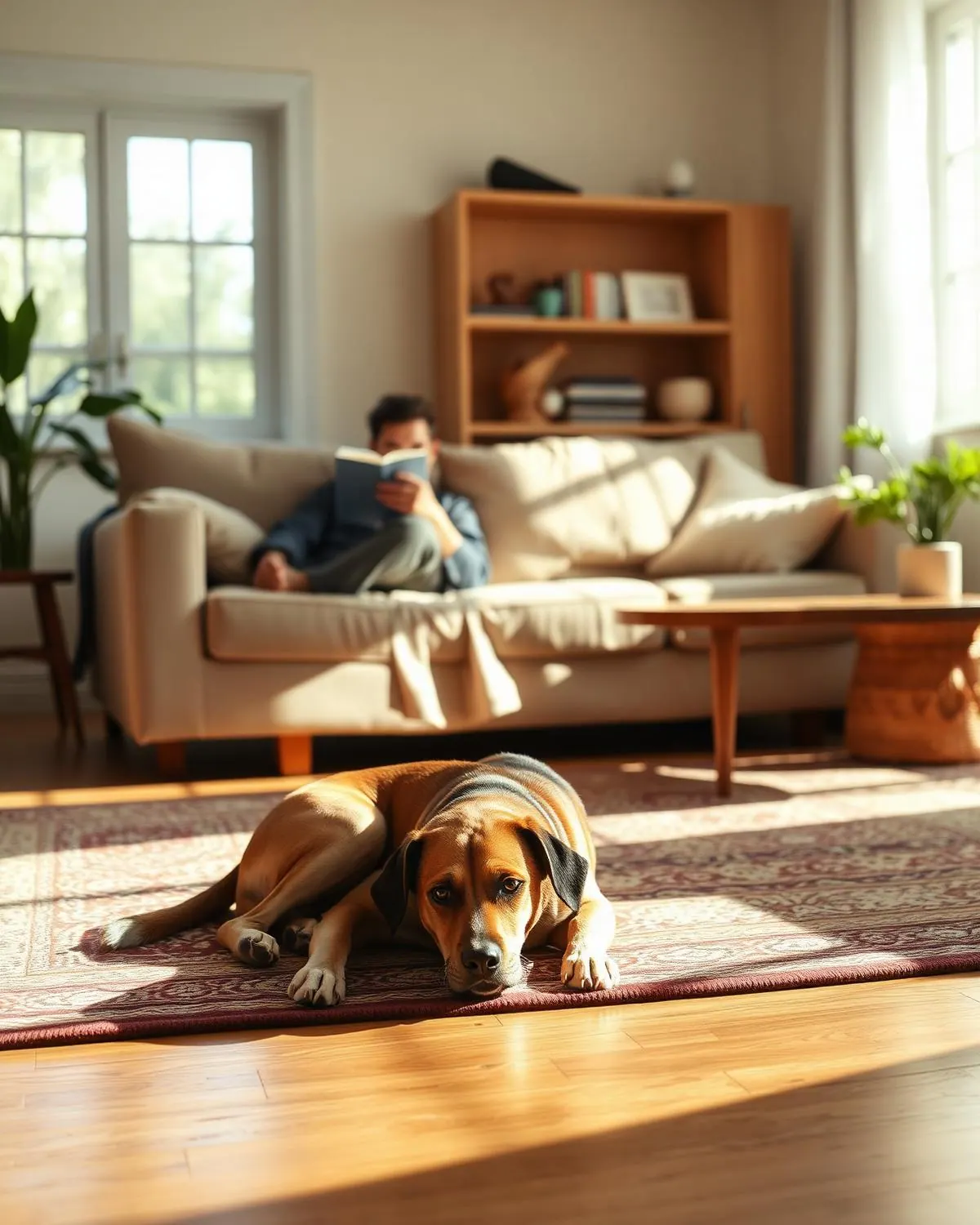
Short, calm absences that teach your dog you always come back.
You'll need: A comfortable bed, Something to chew, A watch or timer.
How to do it
- Step 01
Start with seconds
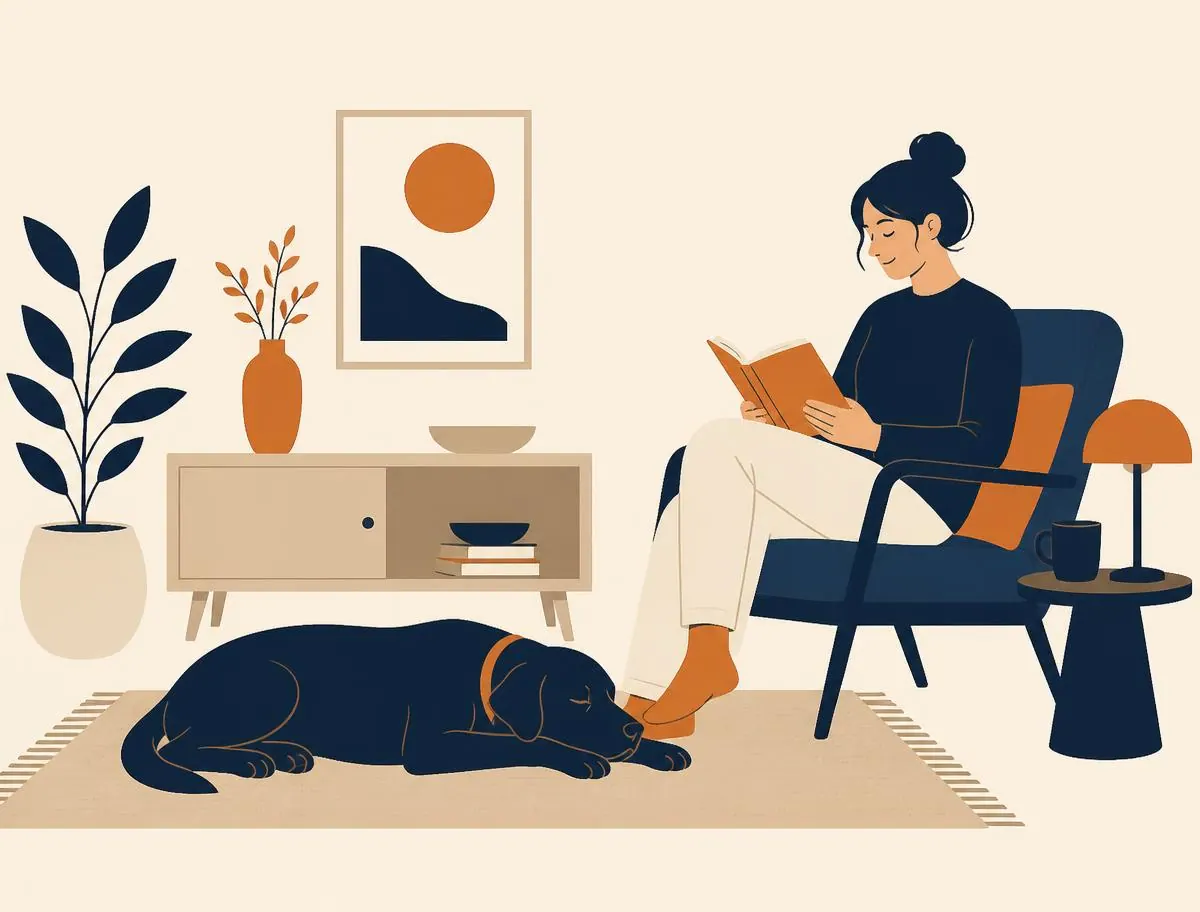
Step out of the room and come straight back in. Make both the leaving and the returning completely unremarkable.
- Step 02
Build slowly
Ten seconds. Thirty. A minute. Vary it, so your dog can't predict a long absence.
- Step 03
Watch how they settle
Film a few minutes on your phone. A dog who lies down and sighs is fine; a dog who paces or cries needs a shorter step.
- Step 04
Keep goodbyes boring
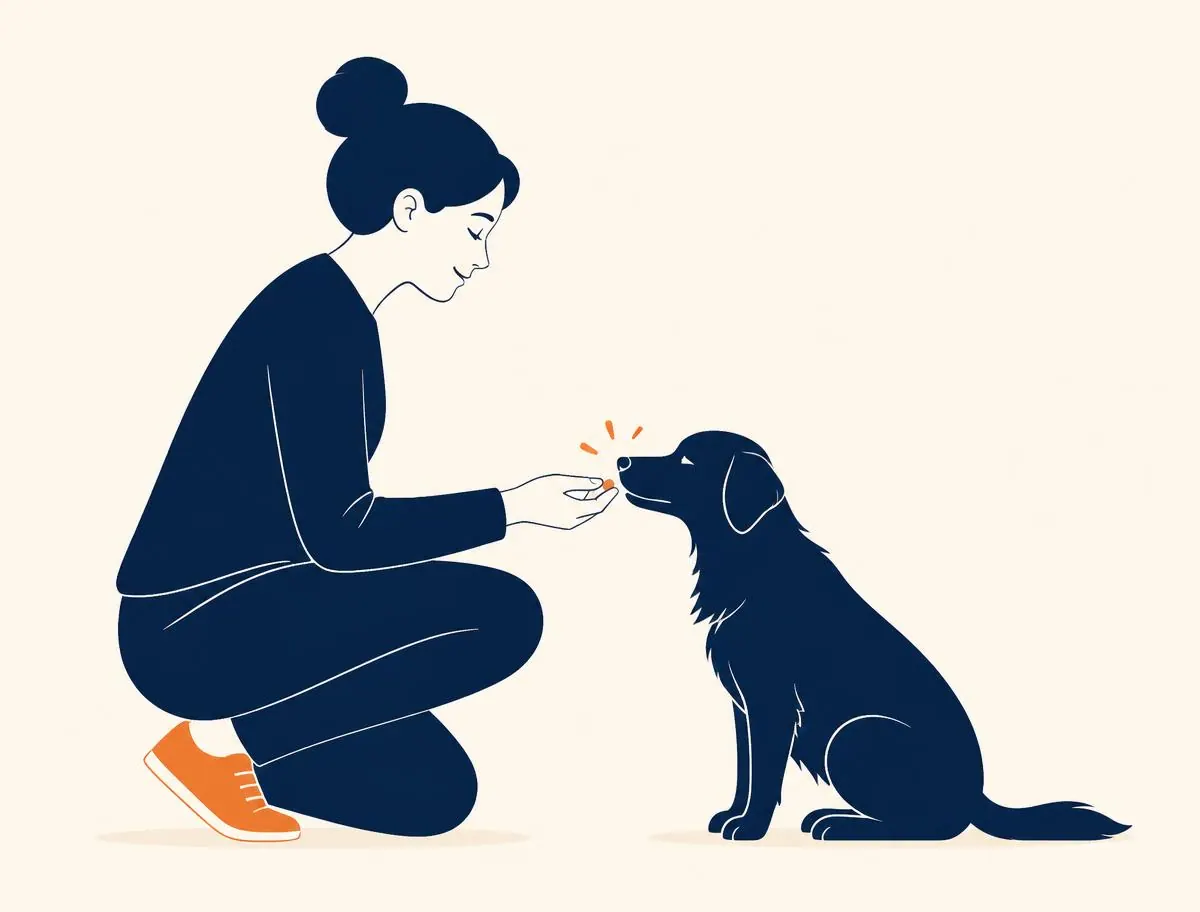
No long farewells and no big reunions. Calm comings and goings are the whole message.
If your dog panics when left — constant barking, drooling, destruction or trying to escape — please don't push on alone. Separation distress responds well to help from a qualified behaviourist, and your vet is a good first call.
How did it go?
Tell us about your dog and we'll keep track of what you've worked on, and suggest what to try next.
A good one to do next
Settling on a matGive your dog a place where nothing is expected of them.