
DoggMatch

In the car

Getting there safely.

An unsecured dog is dangerous — to themselves, and to everyone else in the car. It's also the easiest thing on this page to put right.

A dog secured in a travel crate in the boot of an estate car

Safe and unsafe

How your dog should travel.

The exact legal requirements differ from country to country. Check the rules where you live, and where you're going.

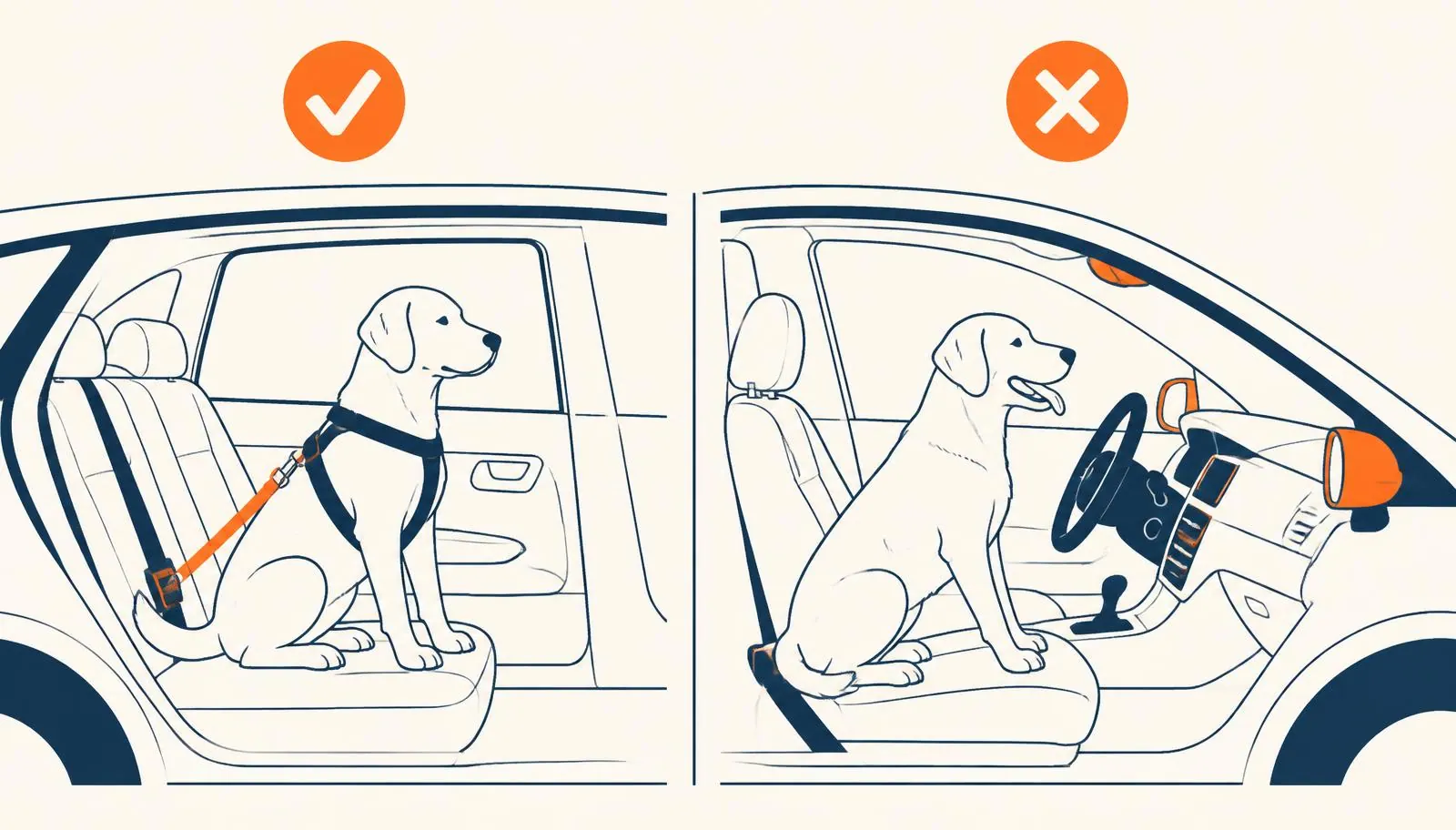
Safe

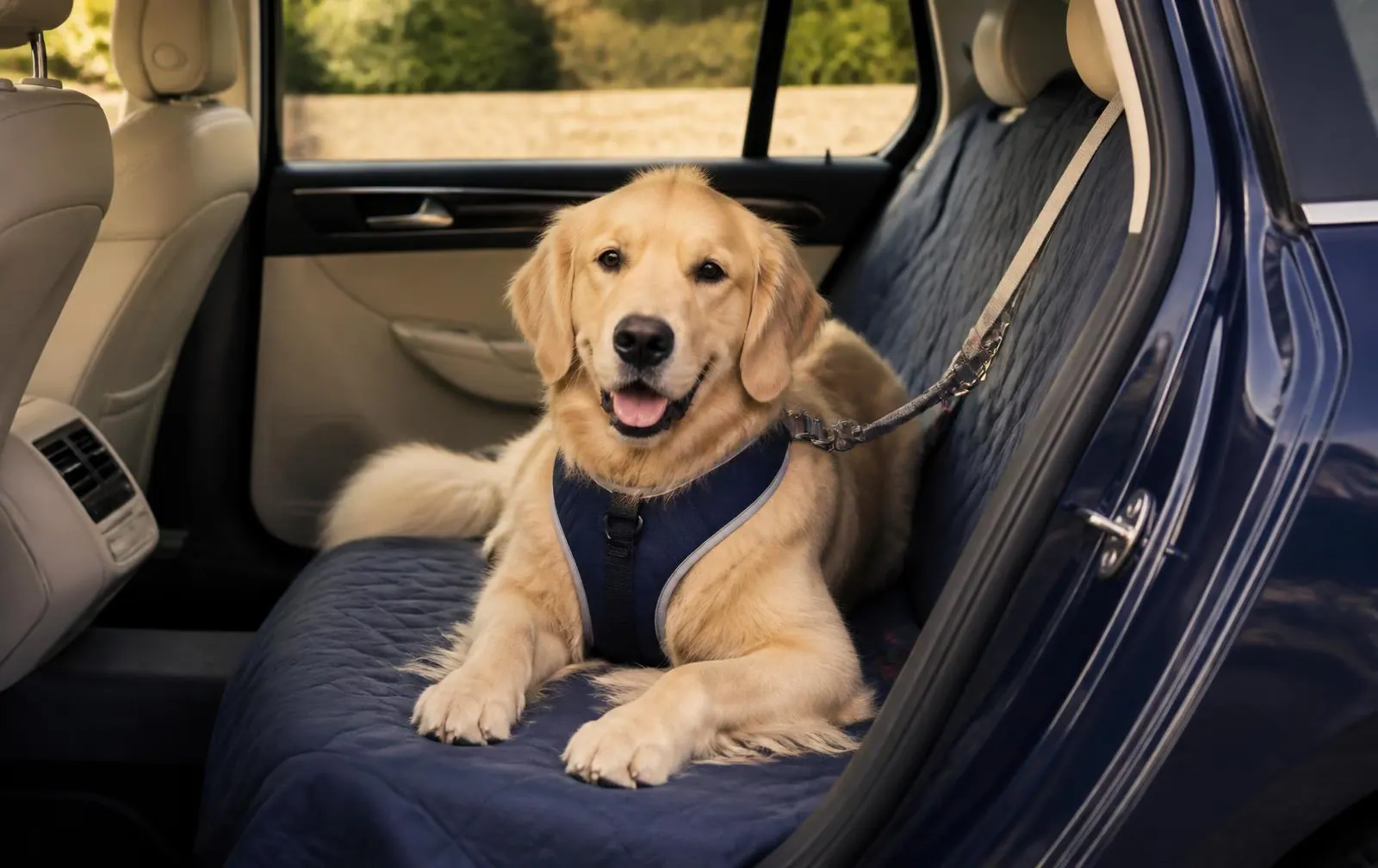
  • Secured in the rear, in a crash-tested harness clipped to the belt
  • Or in a properly sized travel crate that can't slide
  • Or in a boot with a guard fitted to the vehicle
  • Enough room to lie down, sit up and turn around
  • Steady airflow, and a comfortable temperature

Not safe

  • Loose in the car
  • On the driver's lap, or anywhere they can reach the driver
  • Able to move into the footwell or the front
  • Head out of an open window at speed
  • In a position they can be thrown from in a sudden stop
An illustration comparing a dog secured in a crate with an unsecured dog on a car seat

Please read this one

Never leave your dog in a parked car in warm weather.

A car heats up far faster than people expect, and a dog can't cool itself the way we can. Shade moves. A window cracked open does very little. On a mild day it can still become dangerous inside in minutes.

If you see a dog in distress in a locked car — panting hard, drooling, unsteady, unresponsive — call your local emergency number. It is always better to be wrong about it than too late.

First journeys

Start smaller than you think.

Most dogs who hate the car learned to hate it on one long, frightening trip. Undoing that takes far longer than doing it gently in the first place.

If your dog is nervous

  • Don't start with the long journey — start with the stationary car
  • Keep everything predictable: same place, same harness, same routine
  • Reward calm rather than trying to jolly them along
  • Let them choose to get in whenever you can
  • Stop before they're worried, not after
  1. 01

    Let them explore the car standing still

    Doors open, engine off, nobody in a hurry. Let them get in and out as often as they like.

  2. 02

    Reward calm

    A treat for settling, not for climbing about. Keep it quiet and slightly boring.

  3. 03

    Sit in the car without driving

    Two minutes, secured as they would be for a real journey. Then out again, and something nice.

  4. 04

    One very short trip

    Around the block. End it somewhere good — a favourite bit of grass rather than the vet.

  5. 05

    Add a little distance

    Only when the short one is genuinely dull for them. Weeks, not days, for a worried dog.

  6. 06

    Make the destination worth it

    If most journeys end somewhere they love, the car becomes a good thing all by itself.

Car sickness

Very common, and usually improves.

Signs to watch for: drooling, lip licking and swallowing, whining, restlessness or pacing, being sick.

  • Shorter journeys for a while
  • Building up gradually rather than pushing through
  • Avoiding a big meal right before you leave
  • A cool, quiet, steady environment
  • Regular breaks on longer trips

We don't suggest medication or doses. If it keeps happening, or it's severe, your veterinarian can help.

Long journeys

Breaks, water and patience.

  • Water
  • Food
  • Treats
  • Lead
  • Harness
  • Waste bags
  • Towel
  • Medication if needed
  • Health information
  • Important contacts
  • Emergency information
  • A familiar blanket
  • A favourite toy
  • Cleaning supplies

Trains, buses, boats and planes

Everything else that moves.

Every operator sets its own rules, and they change. Always confirm directly with them before you book anything.

Public transport

  • Train

    Rules differ by operator and country. Some carry dogs free, some charge, some require a carrier for small dogs.

  • Bus

    Often at the driver's discretion. Quieter times are kinder for a dog who's still learning.

  • Metro

    Crowds, escalators and noise all at once. Practise the platform before you practise the journey.

  • Ferry

    Many have kennels, some allow dogs on deck, few allow them in cabins. Book the dog, not just yourself.

Flying

  • Airline rules are their own thing, separate from any country's entry requirements
  • Cabin, hold and cargo each have different conditions and carrier sizes
  • Some airlines restrict certain breeds, or won't fly dogs in hot or cold months
  • Documentation requirements vary by airline and by destination
  • Book well ahead — the number of dogs per flight is usually limited
  • Talk to your vet about whether flying suits your particular dog
Flying is genuinely hard on some dogs, and some airlines won't carry flat-faced breeds at all because of the risk. If there's a way to drive or take a ferry instead, it's usually kinder.