
A little heavy
Ribs hard to feel, waist hard to see, belly running flat. Small changes work: measure the food, count the treats, add ten minutes of walking.
My Dog
The number on the scales matters less than how your dog looks and feels under your hands.
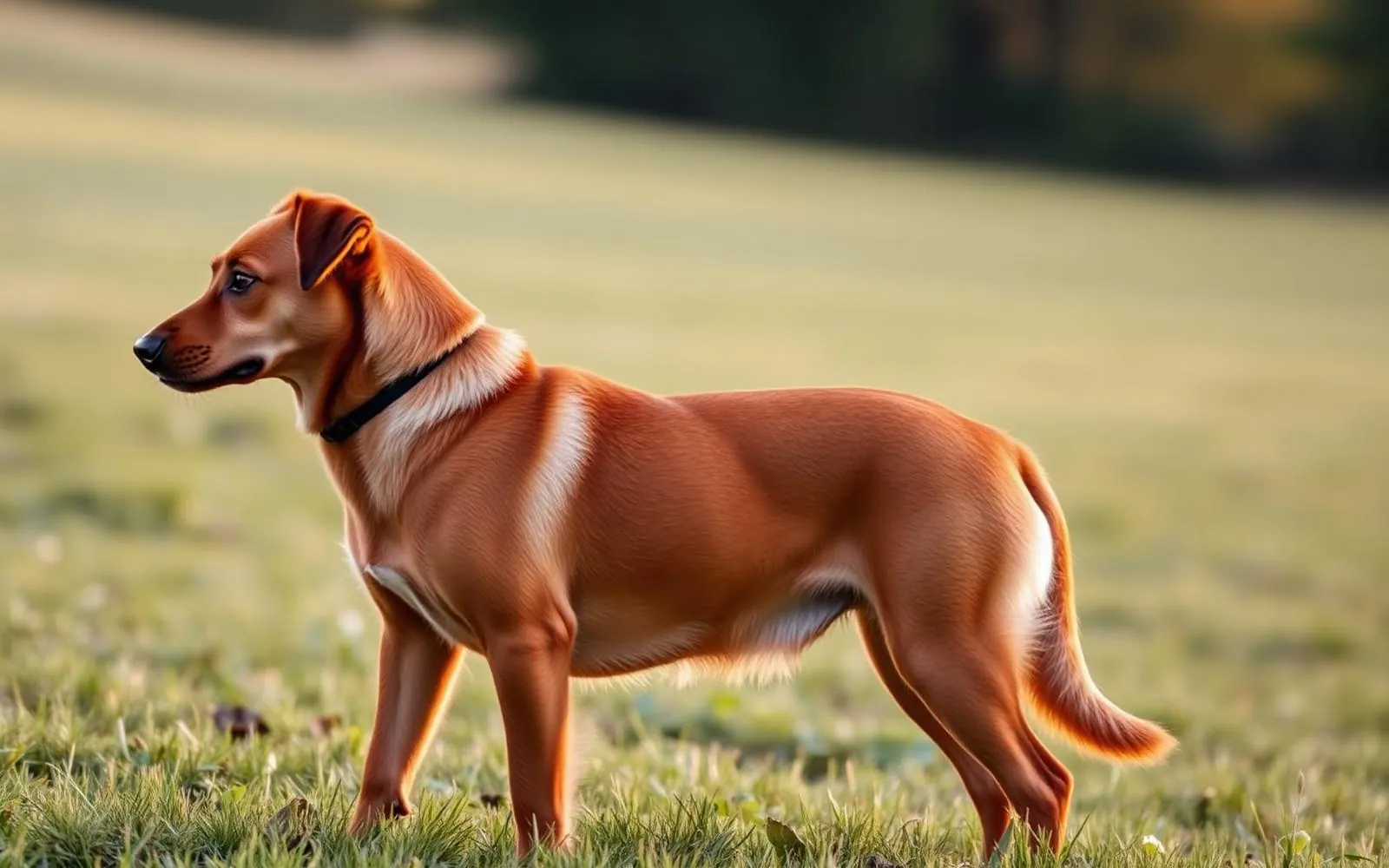
Two dogs of the same weight can be in completely different shape. Body condition is how vets judge it, and you can learn it in about a minute.
This is a guide, not a diagnosis. Breed and build change what 'right' looks like — a Greyhound and a Labrador in perfect condition look nothing alike.
Step 1
Run your fingertips along your dog's side. You should feel the ribs easily under a thin layer, a bit like feeling the bones on the back of your hand.
Step 2
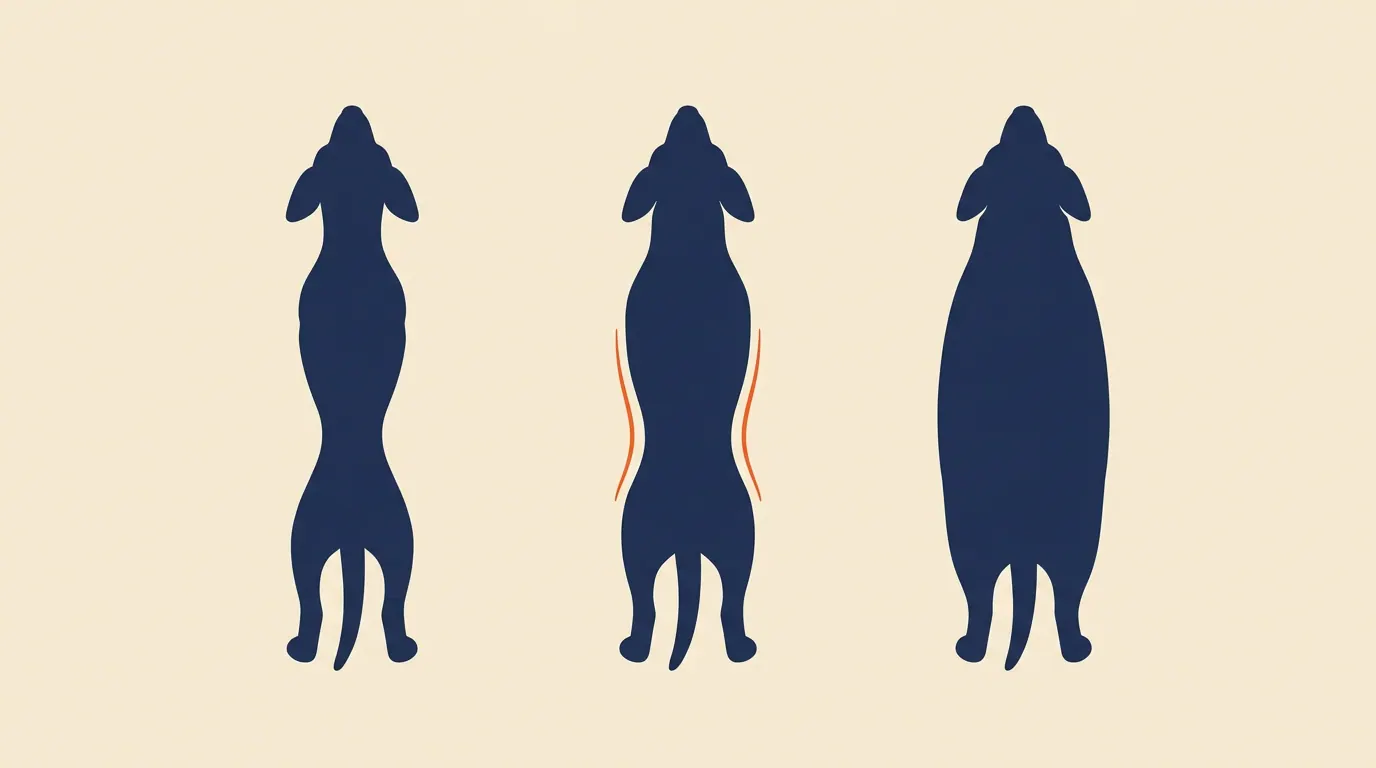
Standing over your dog, look for a gentle narrowing behind the ribs. A straight or bulging outline suggests a bit extra.
Step 3
The belly should tuck up towards the back legs rather than running level with the chest.
Step 4
Changes creep up slowly. Doing this on the same day each month makes the drift obvious while it's still small.
Ribs hard to feel, waist hard to see, belly running flat. Small changes work: measure the food, count the treats, add ten minutes of walking.
Ribs easy to feel, visible waist, belly tucked. Keep doing what you're doing.
Ribs, spine or hips standing out, very little cover. Worth a vet check rather than just more food — unexplained weight loss deserves a look.
Based on guidance from
Keep going