
Short, smooth coats
A quick brush once a week with a rubber mitt or bristle brush keeps loose hair down and feels good to most dogs.
- Sheds year round, often more than people expect
- Bath only when actually dirty
- Skin is easy to see — use that
My Dog
Get to know what's normal for your dog, and you'll notice quickly when it isn't.
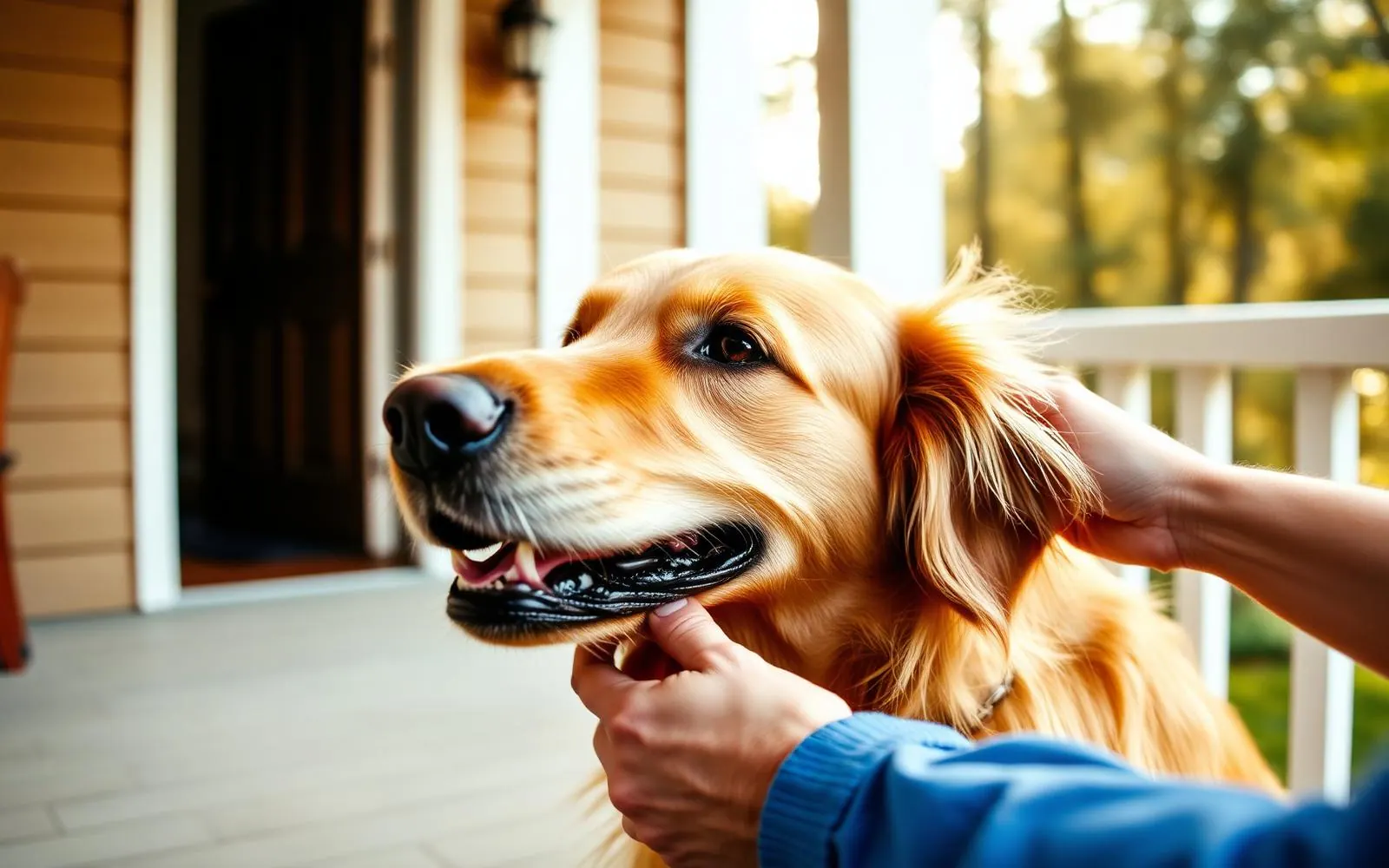
Brushing isn't only about looks. It's how most people first notice a lump, a sore patch, a tick or a mat forming somewhere awkward.
How often depends far more on the coat than the breed name on the paperwork — and mixed-breed dogs can land anywhere.
Step 1
Run your hands over your dog before the brush comes out. You're feeling for lumps, scabs, sore spots and anything stuck in the coat.
Step 2
Work in small patches, right down to the skin. Hold the hair above a mat so you aren't tugging at the skin while you work.
Step 3
Behind the ears, armpits, the back of the legs, the tail and under the collar. Mats almost always start where things rub.
Step 4
A treat, a scratch, a game. Grooming should be a thing your dog leans into, not endures.
A quick brush once a week with a rubber mitt or bristle brush keeps loose hair down and feels good to most dogs.
Needs proper brushing several times a week, right down to the skin rather than skimming the top.
Curls don't shed much, which means the loose hair stays in the coat and mats quietly.
A soft undercoat under a coarser topcoat. It blows out heavily twice a year and you'll find it everywhere.
Harsh, weather-resistant coats that keep their texture with hand-stripping rather than clipping.
Based on guidance from
Keep going